Natural Product Efficacy Evaluation
Effect of Yeast Saccharomyces cerevisiae as a Probiotic on Diet Digestibility, Fermentative Metabolites, and Composition and Functional Potential of the Fecal Microbiota of Dogs Submitted to an Abrupt Dietary Change
Effect of Yeast Saccharomyces cerevisiae as a Probiotic on Diet Digestibility, Fermentative Metabolites, and Composition and Functional Potential of the Fecal Microbiota of Dogs Submitted to an Abrupt Dietary Change
- 저자: Bastos TS; Souza CMM; Legendre H; Richard N; Pilla R; Suchodolski JS; de Oliveira SG; Lesaux AA
- 출처: - (2023)
- DOI/링크: https://doi.org/10.3390/microorganisms11020506
- 연구 계열: Topics/Natural Product Efficacy Evaluation
- 투고일: 2022-12-07
TL;DR
비글 16마리에게 살아있는 Saccharomyces cerevisiae 효모 프로바이오틱(0.12 g/일)을 급여하고 사료를 저단백·저섬유식에서 고단백·고섬유식으로 갑자기 바꾸었다. 소화율은 변하지 않았으나 프로바이오틱군은 분변 생체아민·암모니아·방향족 화합물이 낮고 butyrate가 높았으며 dysbiosis index가 낮고 Bifidobacterium이 많았다. 효모가 사료 전환기 개의 장 기능에 유익할 수 있음을 시사한다.
1. 연구 배경 및 동기
- 다루는 문제: 개에서 사료를 급작스럽게 바꾸면 장내 발효와 미생물 조성이 불안정해질 수 있어 이를 완화하는 프로바이오틱이 검토되고 있다.
- 기존의 공백 / 왜 필요한가: 급작스러운 사료 전환에서 효모 프로바이오틱이 소화율, 발효 대사산물, 분변 미생물 조성과 기능에 미치는 영향이 평가될 필요가 있다.
2. 관련 연구
- 이 논문의 위치: 효모 프로바이오틱의 효과를 소화율, 분변 발효 대사산물, 미생물 조성·기능 잠재력까지 종합 평가했다.
3. 핵심 기여
- 사료 전환 시 효모 프로바이오틱이 분변 단백질 발효 산물을 낮추고 butyrate를 높임을 제시
- dysbiosis index, Bifidobacterium 증가 등 미생물 조성 개선 확인
- 대조군에서 병원성·항생제 내성 관련 유전자 발현 증가 확인
4. 제안 방법론
- 전체 접근 논리: 같은 개체군을 두 군으로 나누어 효모 보충 여부만 달리하고 사료를 단계적으로 바꾸며 소화율, 분변 발효 산물, 미생물을 시점별로 비교했다.
- 단계:
- 성견 비글 16마리를 대조군과 프로바이오틱군(8마리씩)으로 나눔
- 1~21일 저단백·저섬유식(LPF), 22일에 적응 없이 고단백·고섬유식(HPF)으로 전환해 49일까지 급여, 프로바이오틱군은 효모 0.12 g/마리/일을 사료 위에 급여
- 17
22일, 4550일 전분변 수집으로 소화율 계산 - 0, 21, 23, 35, 49일에 분변 pH, 점수, 암모니아, 페놀, 인돌, 생체아민, SCFA, BCFA, 미생물 및 기능 분석
5. 실험 설정
| 항목 | 내용 |
|---|---|
| 대상/재료 | 성견 비글 16마리(5세, 수컷 8·암컷 8, 11.61 ± 0.12 kg, BCS 6 ± 0.12) |
| 처리 조건 | 살아있는 S. cerevisiae CNCM I-5660(1 × 10^10 CFU/g) 0.12 g/마리/일; LPF 1 |
| 대조군 | 효모 무보충 대조군(8마리) |
| 측정 방법 | 소화율, 분변 pH·점수·건물, 암모니아, 페놀, 인돌, 생체아민, SCFA, BCFA, 16S rRNA 미생물 조성과 기능 잠재력 |
6. 실험 결과 분석
| 지표 | 변화(Δ) | 조건 · 유의성 |
|---|---|---|
| 사료 소화율 | 효모 보충의 유의한 영향 없음 | 통계적으로 유의하지 않음 |
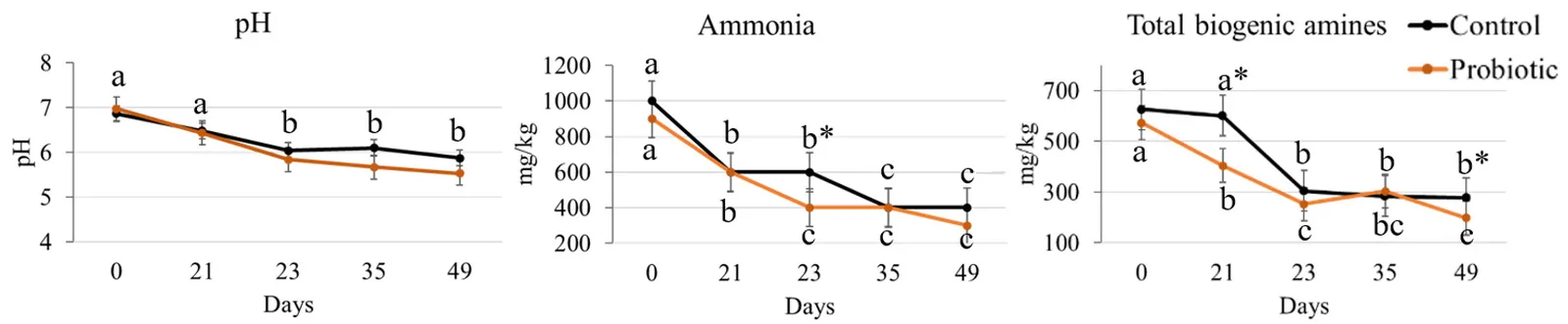
| 분변 총 생체아민 | 프로바이오틱군에서 낮음 | 21, 49일, p < 0.05 |
| 분변 암모니아와 방향족 화합물 | 프로바이오틱군에서 낮음(암모니아는 23일) | p < 0.05 |
| 분변 butyrate | 프로바이오틱군에서 높음 | p < 0.05 |
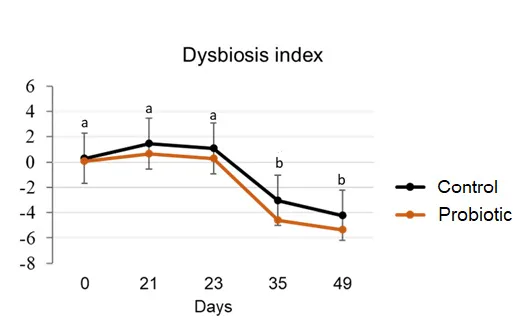
| dysbiosis index | 프로바이오틱군에서 낮음 | - |
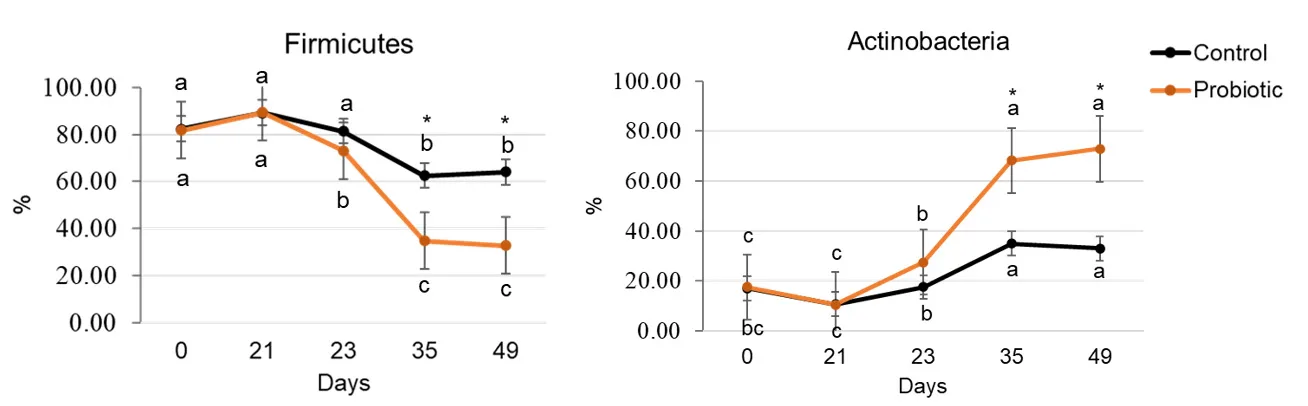
| Bifidobacterium, Turicibacter | 프로바이오틱군에서 풍부도 높음(Bifidobacterium은 35, 49일) | p < 0.05 |
| Lactobacillus, E. coli | 프로바이오틱군에서 풍부도 낮음 | p < 0.05 |
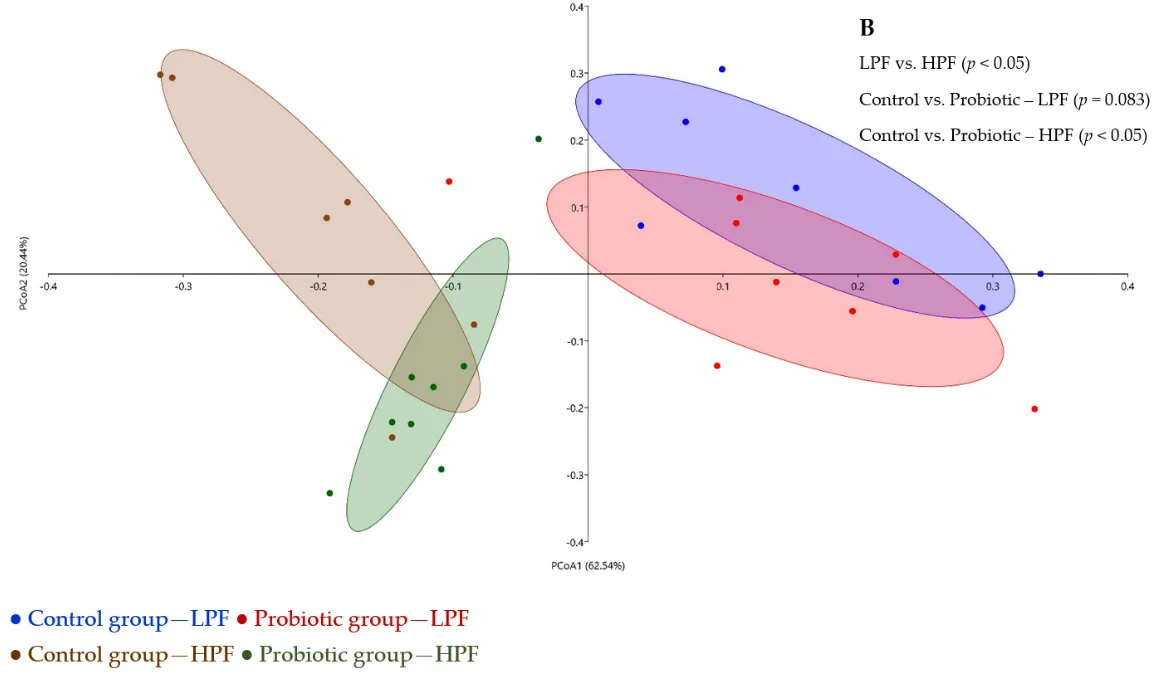
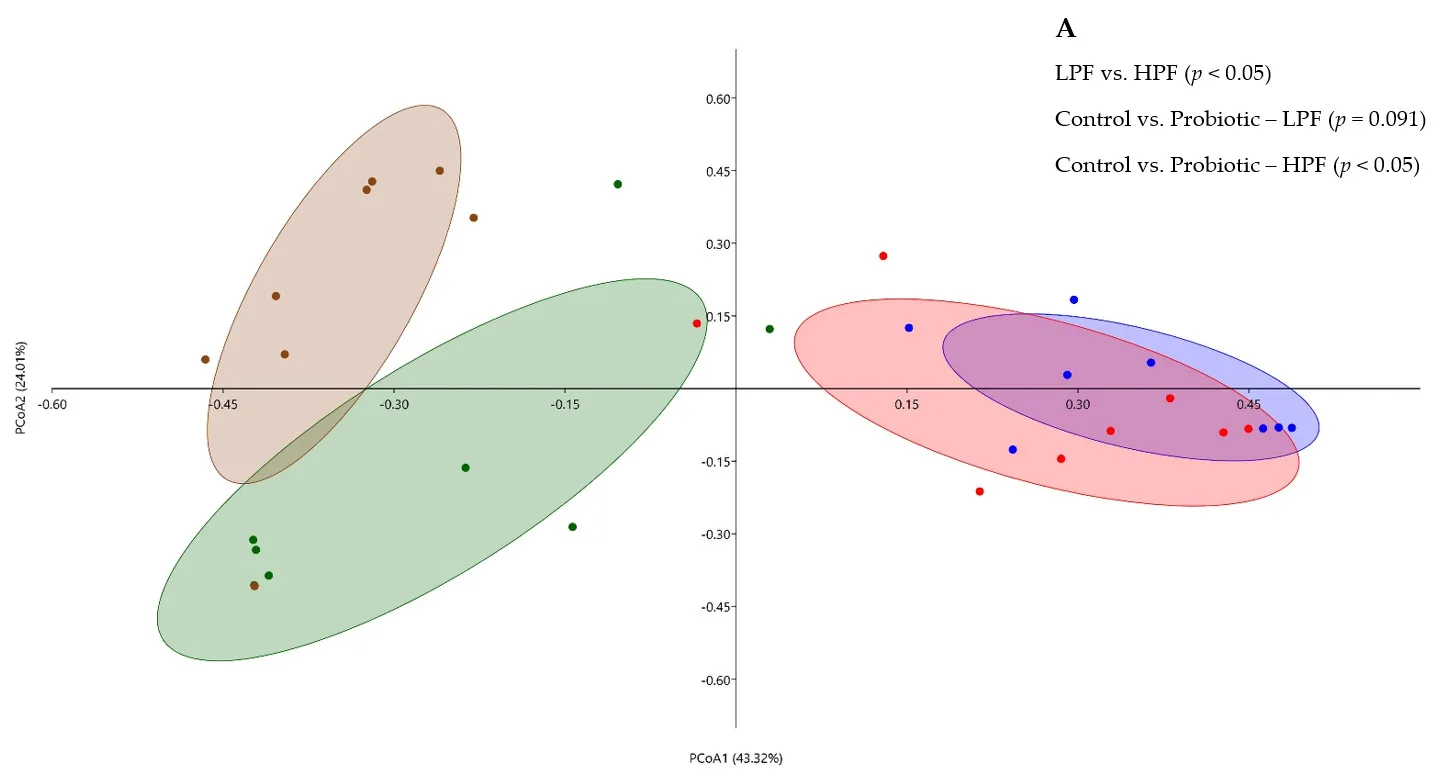
| 베타다양성 | 49일에 군 간 뚜렷한 구분 | - |
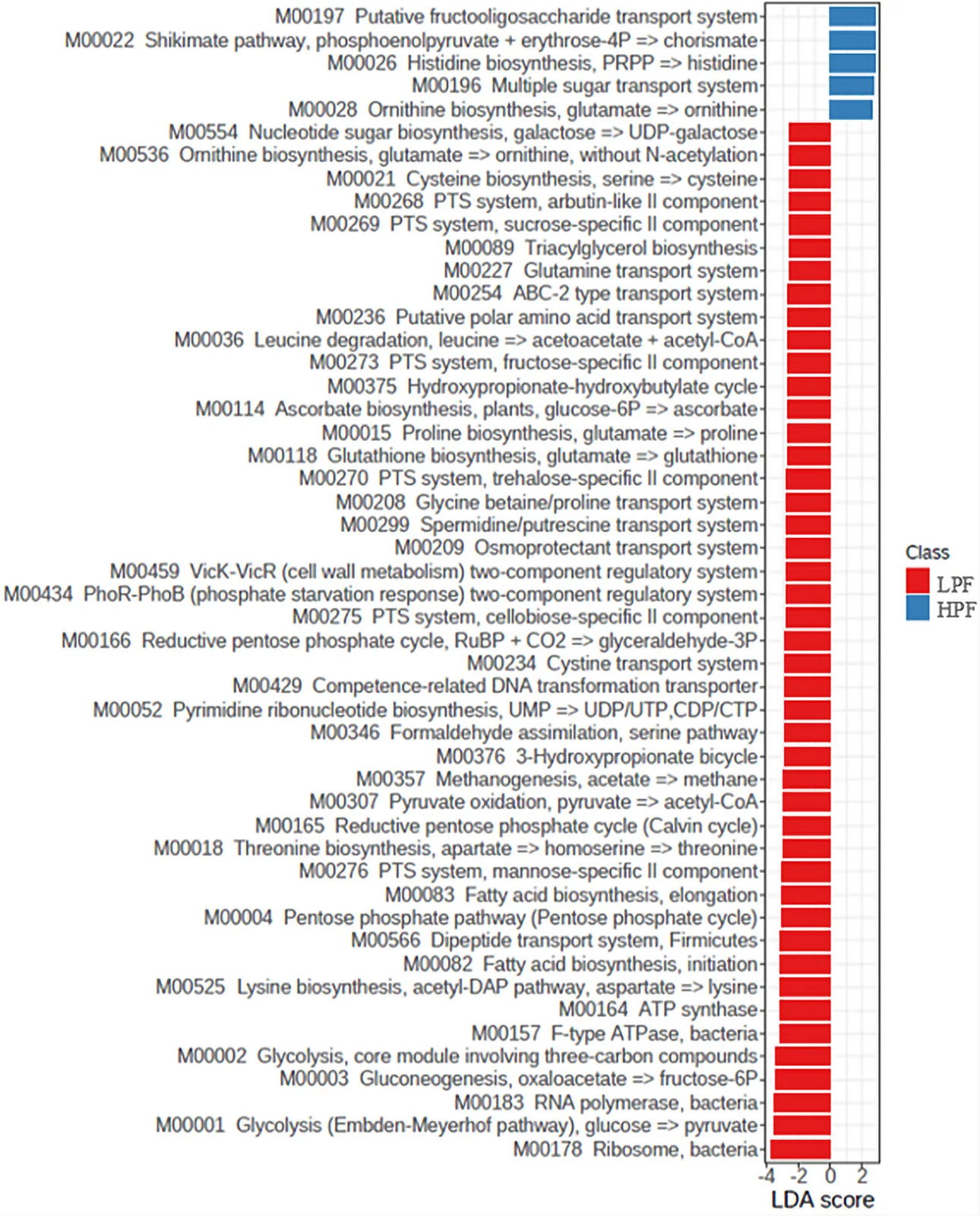
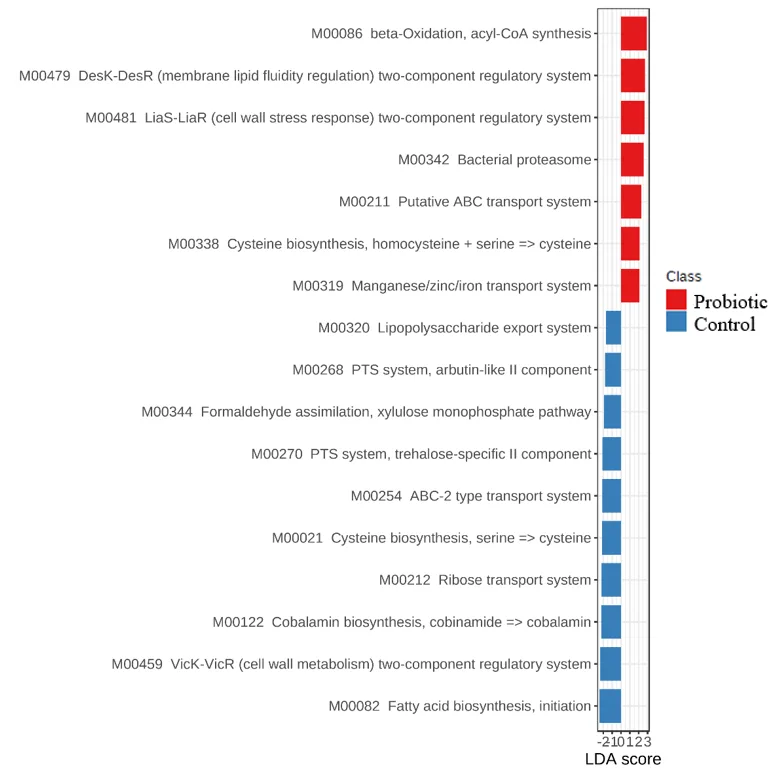
| 병원성 인자, 항생제 내성, 삼투 스트레스 관련 유전자 | 대조군에서 발현 상향 | - |
제안 기전(인과 사슬):
생균 효모 급여 → Bifidobacterium 증가·E. coli 감소 → 단백질 발효 산물(생체아민·암모니아·방향족) 감소와 butyrate 증가, dysbiosis index 감소
7. 비판적 평가
강점
- 소화율, 발효 대사산물, 미생물 조성과 기능을 함께 평가
- 시점별 반복 채취로 사료 전환 후 시간 경과를 추적
한계 · 의문
- 군당 8마리의 비글로 소규모이고 5세 성견만 대상
- 연구비·제품 제공 기업 소속 저자가 포함된 연구
8. 향후 연구 방향
9. 결론
평가한 생균 효모는 급작스러운 사료 전환 시 개의 장 기능에 유익한 효과를 낼 수 있다. 소화율은 바뀌지 않았지만 발효 대사산물과 미생물 조성이 개선되었다.
Keywords
Saccharomyces cerevisiae, yeast probiotic, dog, dietary change, fecal microbiota, biogenic amines, butyrate, dysbiosis index
원문 그림
원문 그림 · 라이선스: cc-by