Natural Product Efficacy Evaluation
Safety and tolerability of escalating cannabinoid doses in healthy cats
Safety and tolerability of escalating cannabinoid doses in healthy cats
- 저자: Kulpa JE; Paulionis LJ; Eglit GM; Vaughn DM
- 출처: - (2021)
- DOI/링크: https://doi.org/10.1177/1098612X211004215
- 연구 계열: Topics/Natural Product Efficacy Evaluation
- 게재일: 2021-03-26
TL;DR
건강한 고양이 20마리에게 CBD, THC, CBD/THC 대마유를 최대 11단계로 증량 투여했을 때 모든 개체에서 최고 용량까지 안전하게 도달했다. 이상반응은 경미하고 일시적이었으며 THC 함유 제제에서 무기력, 저체온, 운동실조, 순막 돌출이 더 흔했다.
1. 연구 배경 및 동기
- 다루는 문제: 고양이에서 CBD와 THC의 안전성과 내약성에 대한 통제 연구는 부족했다. 이 연구는 CBD, THC, 혼합 대마유를 경구 증량 투여해 안전성과 내약성을 평가했다.
- 기존의 공백 / 왜 필요한가: 고양이에서 CBD와 THC를 단독 및 병용으로 통제된 연구 환경에서 평가한 연구가 없었다.
2. 관련 연구
- 이 논문의 위치: 저자들은 고양이에서 CBD와 THC의 안전성과 내약성을 단독·병용으로 통제된 조건에서 탐색한 첫 연구라고 보고했다.
3. 핵심 기여
- CBD 30.5 mg/kg, THC 41.5 mg/kg, CBD:THC 13.0:8.4 mg/kg까지 증량이 안전하게 달성됨을 보였다
- 운반 오일(MCT, 해바라기유)과 THC 함량에 따른 이상반응 양상 차이를 제시했다
- CBD/THC 병용 시 혈장 농도가 높아 약동학적 상호작용 가능성을 시사했다
4. 제안 방법론
- 전체 접근 논리: 위약 2종과 대마유 3종 군에 고양이를 무작위 배정하고 최소 3일 간격으로 증량 용량을 투여하면서 임상 관찰, 혈구 검사, 혈액화학, 혈장 칸나비노이드를 평가했다.
- 단계:
- 건강한 성묘 20마리를 5개 군(군당 4마리)에 무작위 배정: 해바라기유 위약, MCT 위약, MCT의 CBD, MCT의 THC, 해바라기유의 CBD/THC(1.5:1)
- 금식 상태에서 최대 11단계의 증량 용량을 시린지로 경구 투여하고 용량 간격은 최소 3일
- 임상 관찰, 전혈구 계산(CBC), 혈액화학, 혈장 CBD·THC와 대사체(7-COOH-CBD, 11-OH-THC)를 평가
5. 실험 설정
| 항목 | 내용 |
|---|---|
| 대상/재료 | 건강한 성묘 20마리(수컷 10, 암컷 10), 연령 1-1.2세, 체중 3-6 kg |
| 처리 조건 | CBD유(MCT), THC유(MCT), CBD/THC유(해바라기유), 최대 11단계 증량(예: 0.15 ml/kg에서 1.67 ml/kg), 용량 사이 3일 이상 |
| 대조군 | MCT 오일 및 해바라기유 위약군 |
| 측정 방법 | 임상 관찰, CBC, 혈액화학, 체중, 마지막 3회 투여 후 혈장 칸나비노이드와 대사체 |
6. 실험 결과 분석
| 지표 | 변화(Δ) | 조건 · 유의성 |
|---|---|---|
| 최대 도달 용량 | CBD 30.5 mg/kg, THC 41.5 mg/kg, CBD:THC 13.0:8.4 mg/kg까지 모든 개체에서 안전하게 도달 | 각 대마유 투여군 |
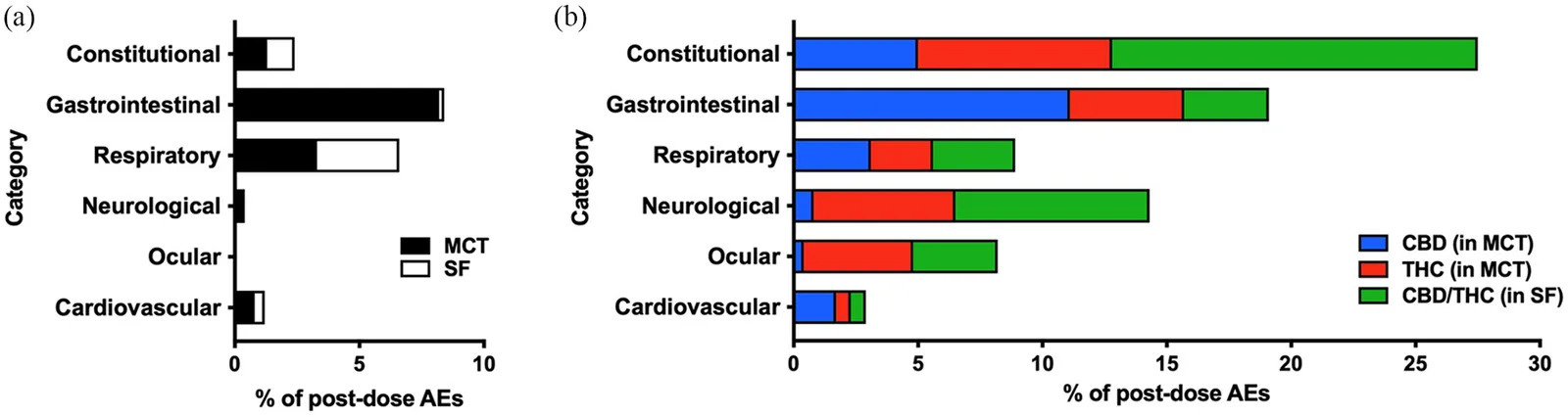
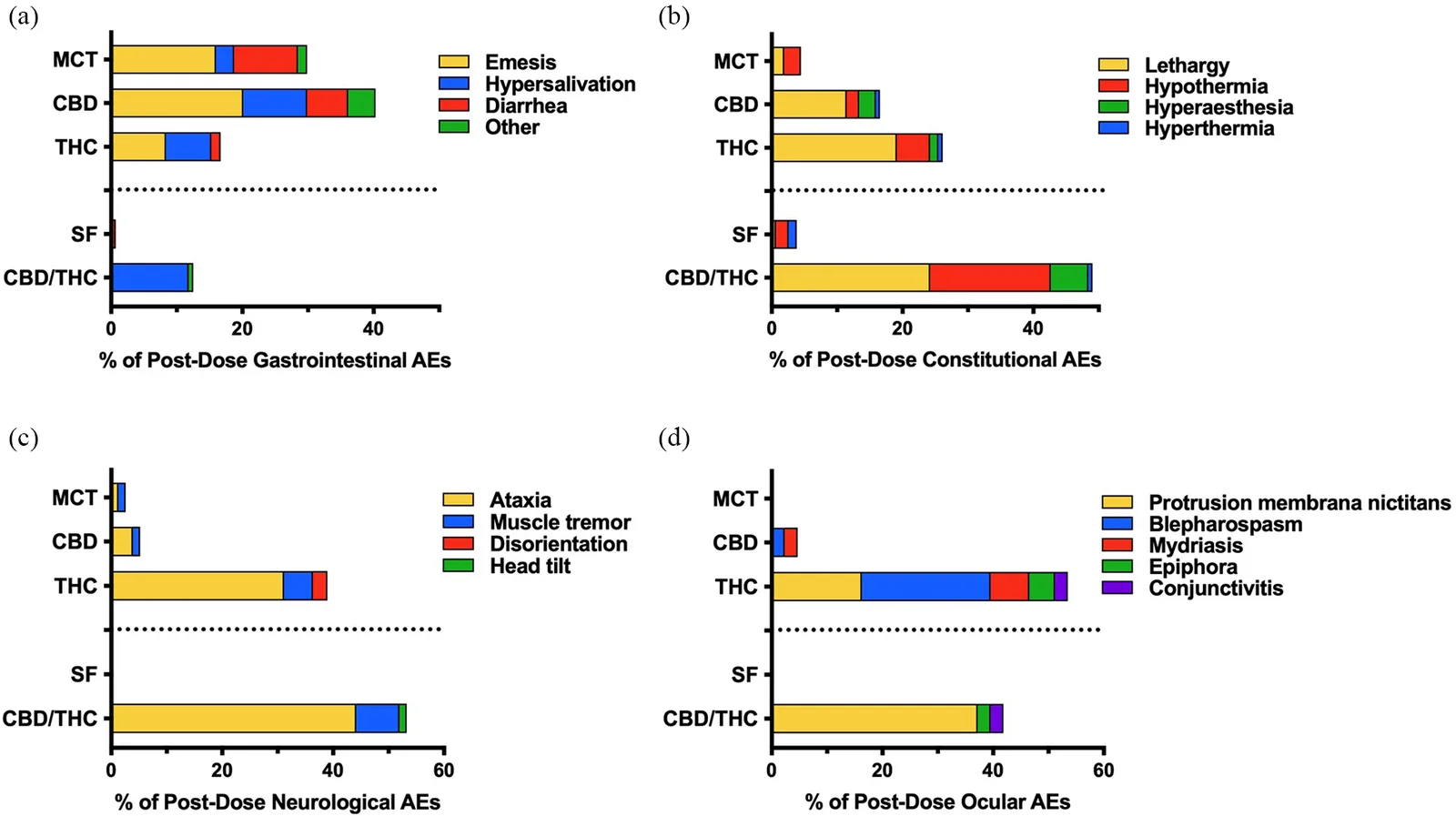
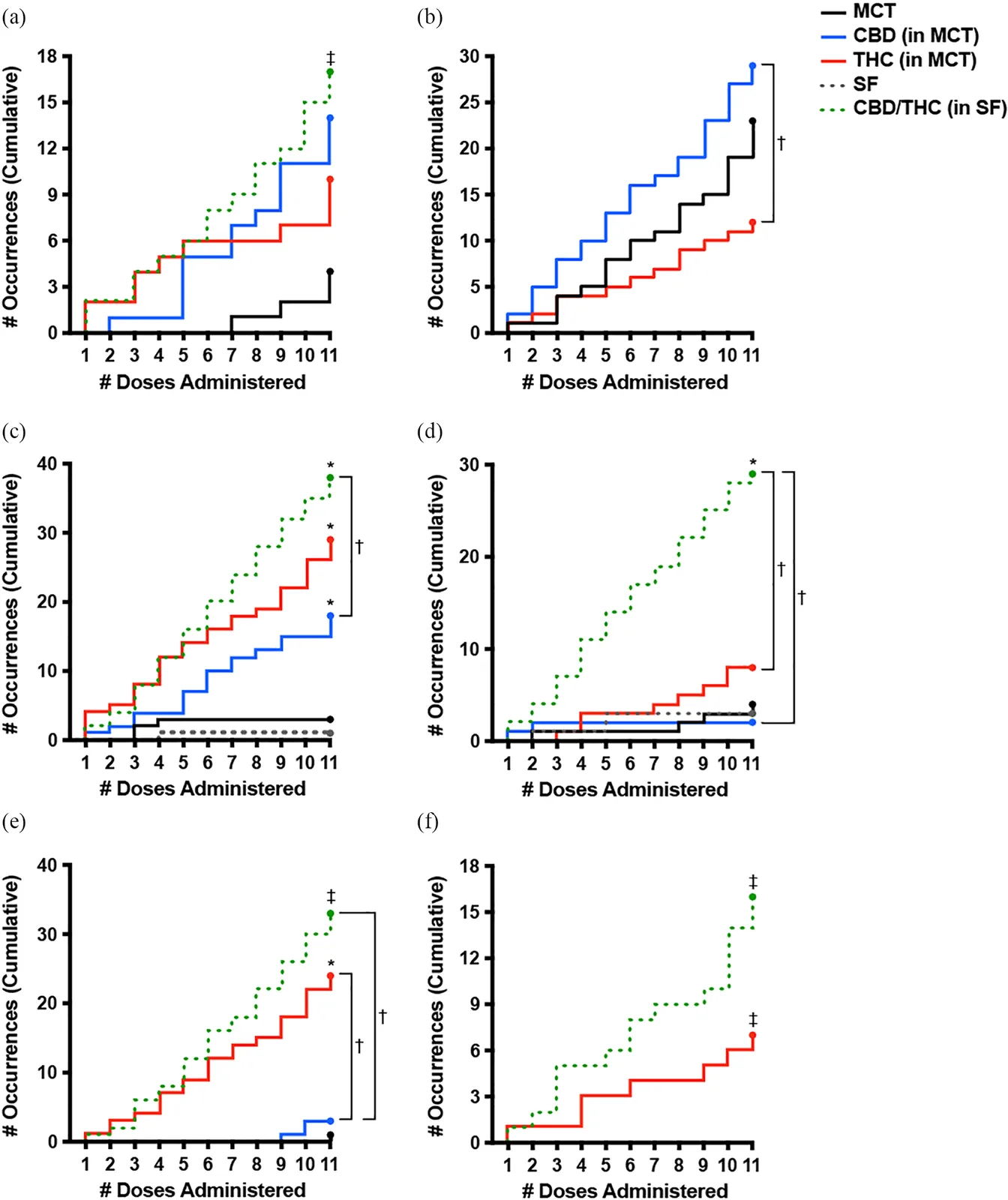
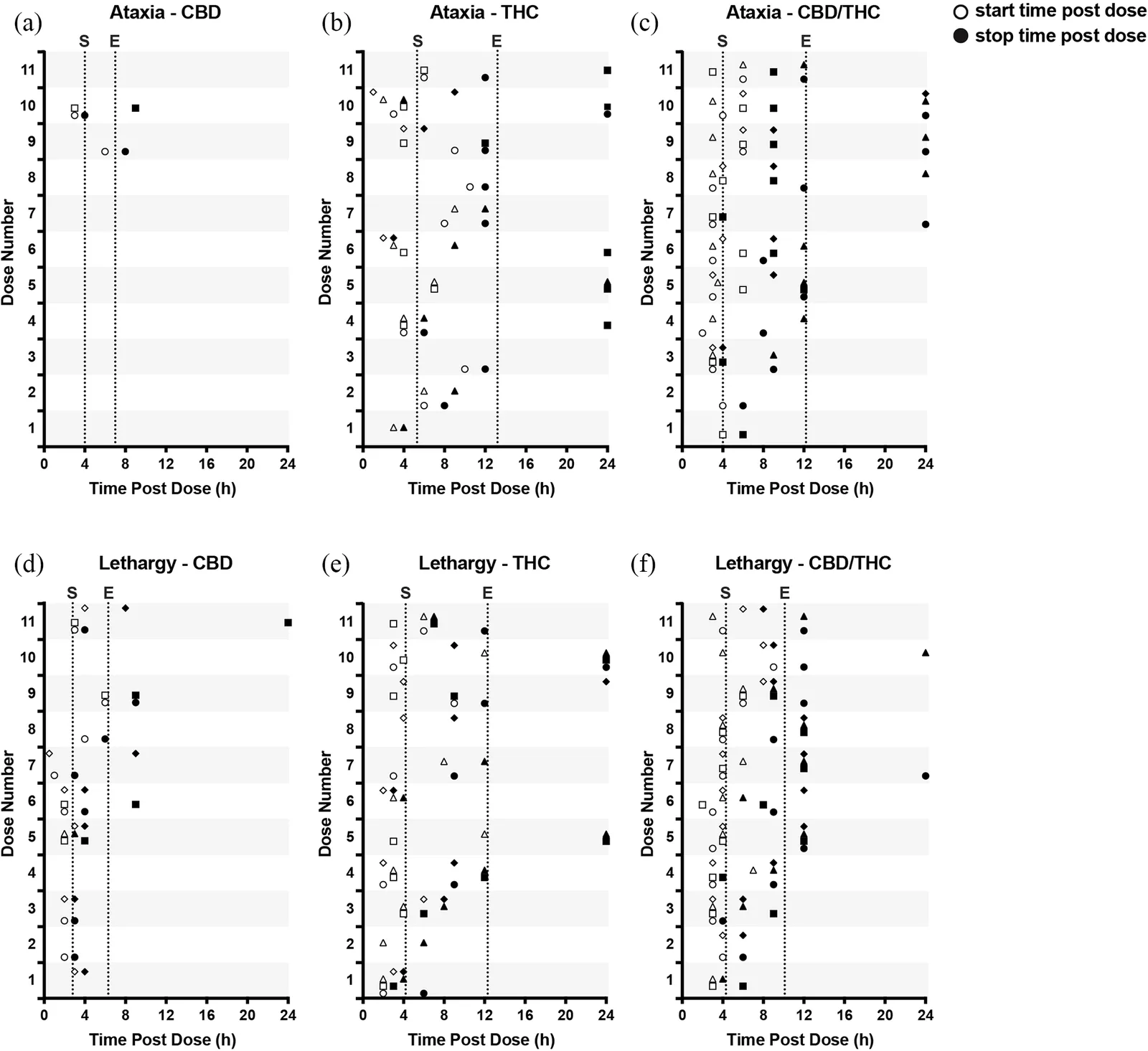
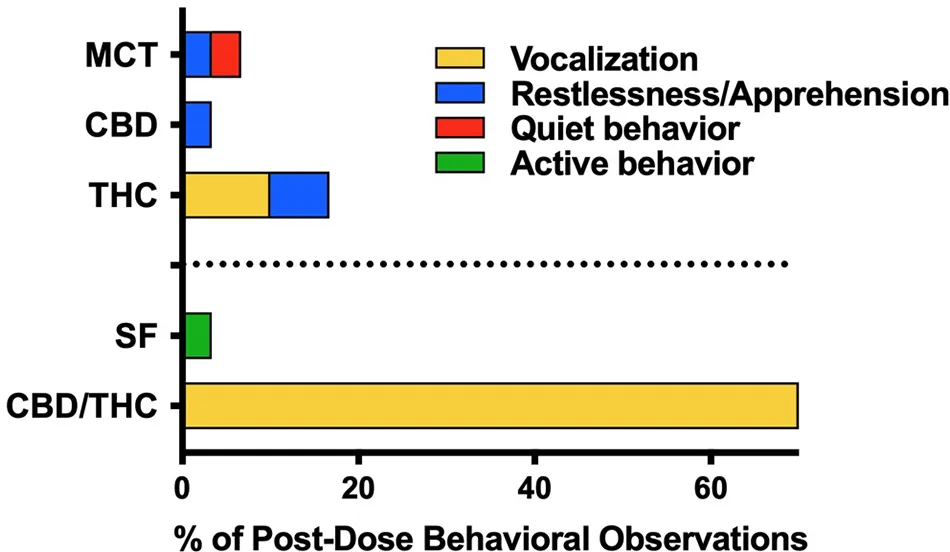
| 이상반응 | 모두 경미하고 일시적이며 의학적 개입 없이 회복 | 위장관 이상은 MCT 함유 제제에서, 무기력·저체온·운동실조·순막 돌출은 THC 함유 제제에서 더 흔함 |
| CBC 및 혈액화학 | 임상적으로 유의한 변화 없음 | 처치군 전체 |
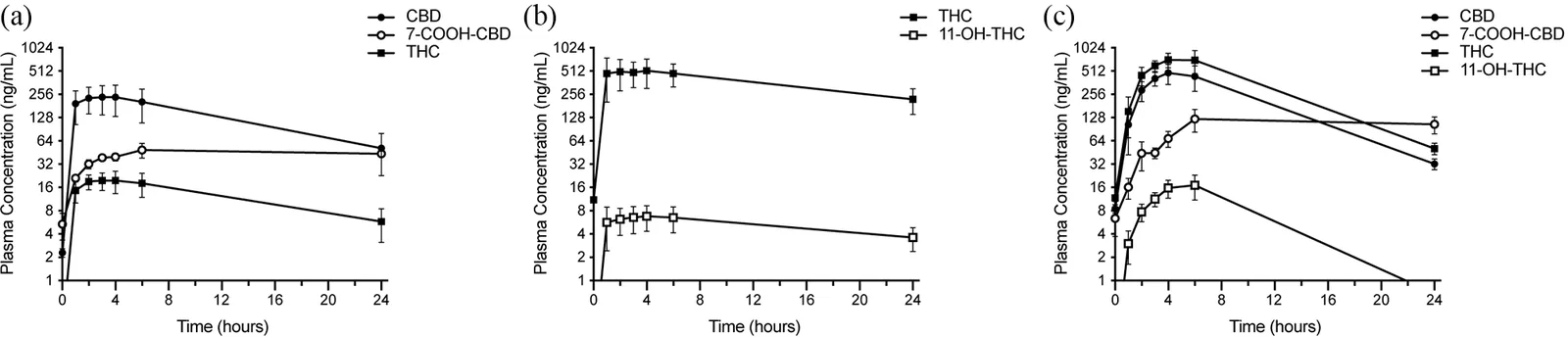
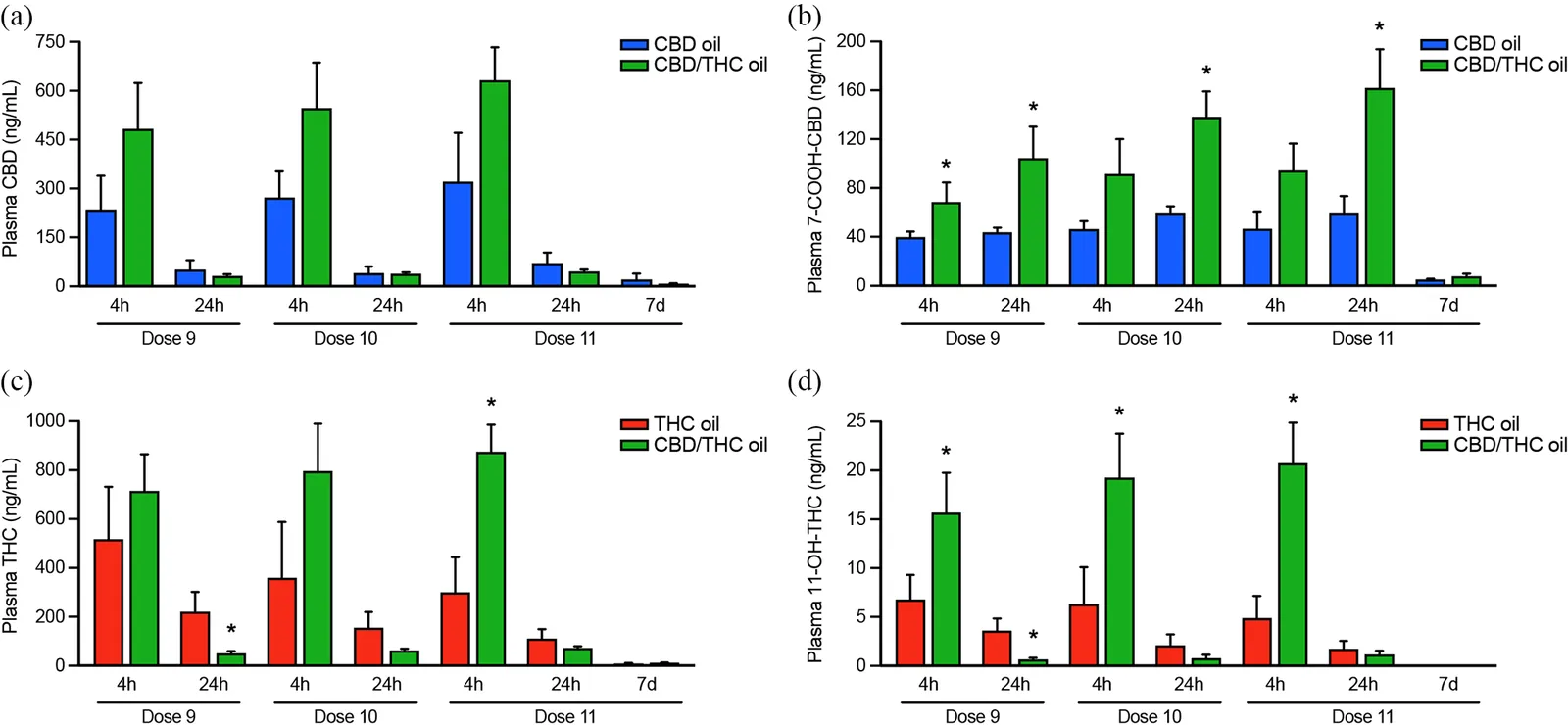
| 혈장 칸나비노이드와 대사체 | CBD/THC 병용 제제에서 더 높음 | 약동학적 상호작용 시사 |
7. 비판적 평가
강점
- 위약 대조, 눈가림, 무작위 배정 설계
- 증량 용량 설계로 최대 용량까지 내약성 확인
- 안전성 평가에 혈장 약동학 자료를 병행
한계 · 의문
- 군당 4마리로 표본이 작다
- 건강한 성묘만 대상으로 질환 고양이에는 적용하기 어렵다
8. 향후 연구 방향
9. 결론
건강한 고양이에서 CBD, THC, 병용 대마유의 증량 투여는 안전하고 내약되었다. 이 결과는 고양이에서 CBD의 치료적 사용이나 THC 함유 제품 우발 노출의 임상 징후를 이해하는 데 참고가 된다.
Keywords
cannabidiol, THC, cat, safety, tolerability, dose escalation, pharmacokinetics
원문 그림
원문 그림 · 라이선스: cc-by-nc