Natural Product Efficacy Evaluation
Bacterial Pathogens of Bovine Mastitis: Prevalence, Antimicrobial Susceptibility, and Sensitivity to Caesalpinia sappan Both In Vitro and In Vivo Studies
Bacterial Pathogens of Bovine Mastitis: Prevalence, Antimicrobial Susceptibility, and Sensitivity to Caesalpinia sappan Both In Vitro and In Vivo Studies
- 저자: Tadee P; Pattanawong W; Manwicha A; Khaodang P; Amornlerdpison D; Chansakaow S; Tipduangta P; Chukiatsiri K
- 출처: - (2025)
- DOI/링크: https://doi.org/10.3390/biology14040350
- 연구 계열: Topics/Natural Product Efficacy Evaluation
- 투고일: 2025-02-26
TL;DR
태국 젖소 우유 100개 시료에서 40종 138균주를 분리했고 대장균(10.87%)이 가장 많았다. 페니실린 내성이 65.21%로 가장 높았고 9균주는 시험한 18개 항생제 모두에 내성이었다. Caesalpinia sappan의 평균 MIC는 0.63-17.68 mg/mL였고, 이를 주성분으로 한 유방 주입제는 총 세균수와 CMT 점수를 유의하게 낮췄다(p < 0.01).
1. 연구 배경 및 동기
- 다루는 문제: 유방염은 낙농업의 큰 경제 손실 원인이며, 관리가 항생제에 의존해 내성과 우유 내 잔류 문제가 커지고 있다. 허브 약제가 대안으로 제시된다.
- 기존의 공백 / 왜 필요한가: 지역 유방염 병원균의 내성 현황과 C. sappan의 항균 효능에 대한 시험관·생체 근거가 필요하다.
2. 관련 연구
- 이 논문의 위치: 병원균 동정, 항생제 감수성, 식물 추출물 MIC, 시제품 주입제의 동물 시험을 한 연구에서 수행했다.
3. 핵심 기여
- 유방염 원인균과 항생제 내성 양상을 보고했다
- C. sappan의 균종별 MIC를 제시했다
- C. sappan 기반 유방 주입제 시제품의 동물 효과를 확인했다
4. 제안 방법론
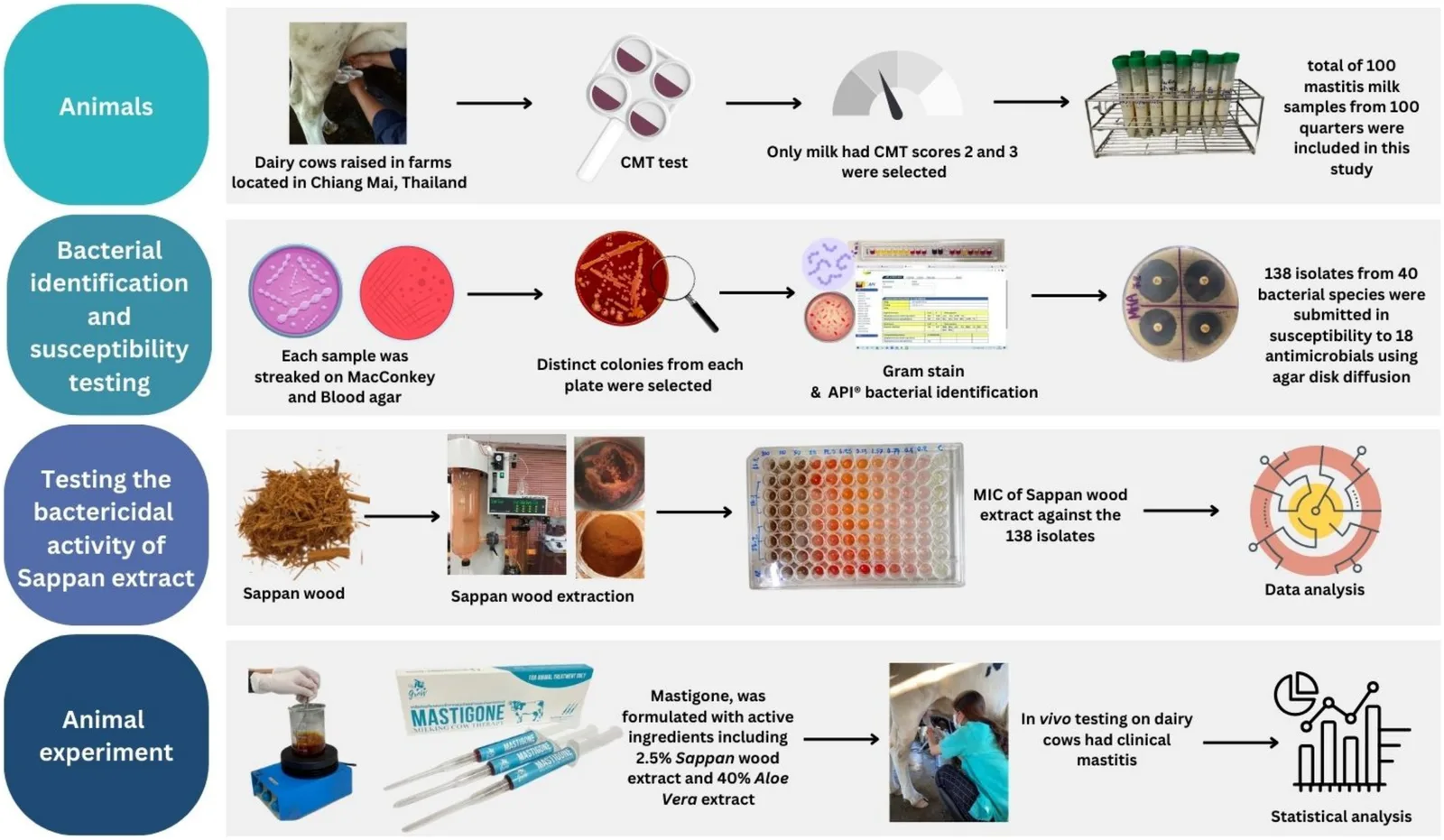
- 전체 접근 논리: CMT 양성 우유에서 병원균을 분리해 내성을 평가하고, C. sappan 추출물의 시험관 활성 후 시제품을 젖소에서 평가했다.
- 단계:
- CMT 2-3점 분방 100곳의 우유 시료 채취(2021년 5월-2022년 2월)
- API로 균종 동정, 18종 항생제 디스크 확산법 감수성 시험
- C. sappan 심재의 물 추출·분무 건조 후 agar microdilution으로 MIC 측정
- C. sappan 기반 유방 주입제 시제품의 동물 시험
5. 실험 설정
| 항목 | 내용 |
|---|---|
| 대상/재료 | 치앙마이 Maejo 협동조합 Holstein Friesian 젖소(CMT 2-3점 분방 100곳), 분리균 138주(40종) |
| 처리 조건 | C. sappan 추출물 0.2-200 mg/mL 2배 희석 MIC 시험, 시제품 유방 주입제 처리 |
| 대조군 | E. coli ATCC 25922(감수성 시험 대조) |
| 측정 방법 | 균종 분포, 항생제 내성률, MIC, 총 세균수, CMT 점수 |
6. 실험 결과 분석
| 지표 | 변화(Δ) | 조건 · 유의성 |
|---|---|---|
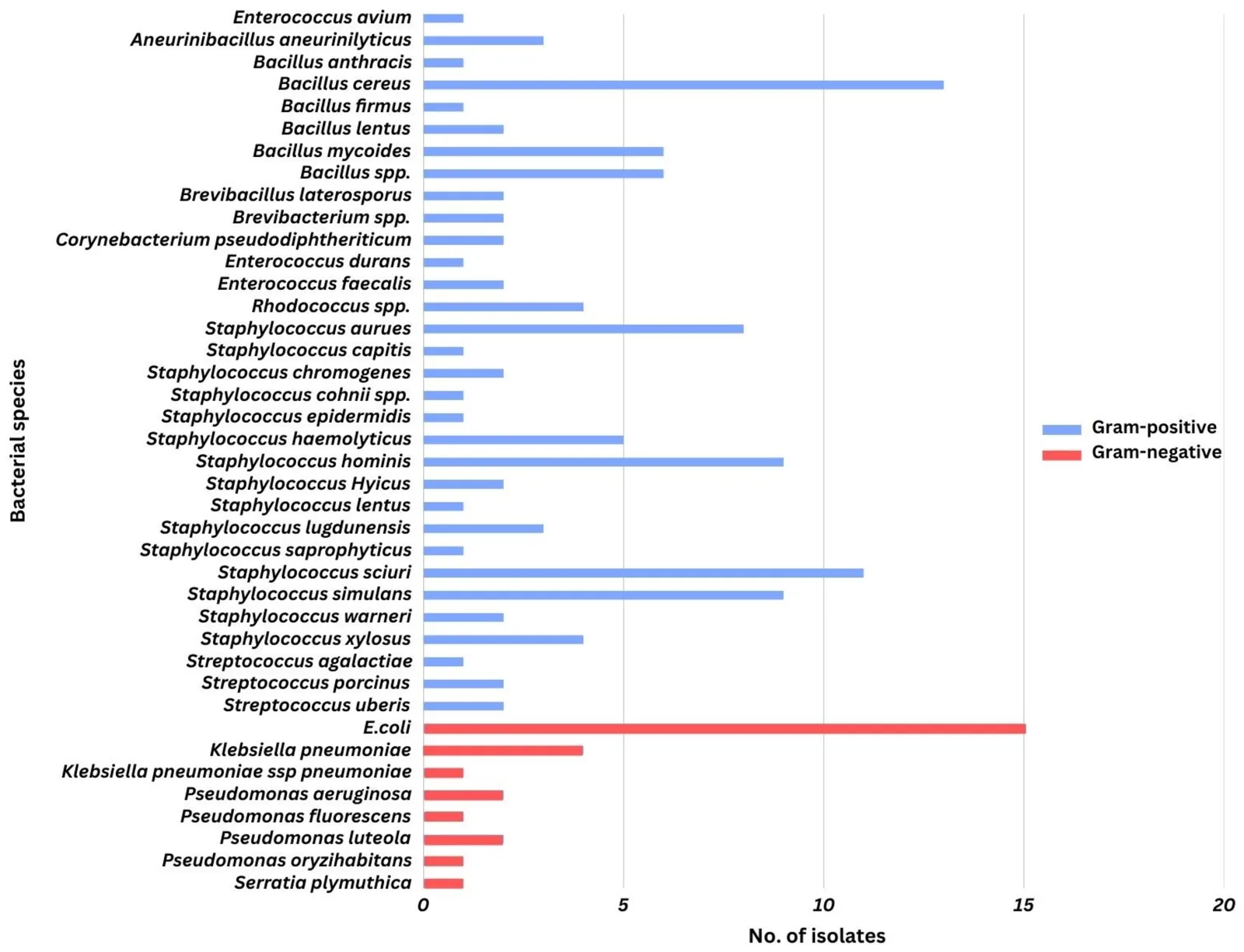
| 분리균 | 138주(40종), 대장균 10.87%, Bacillus cereus 9.42%, Staphylococcus sciuri 7.97% | 우유 시료 100개 |
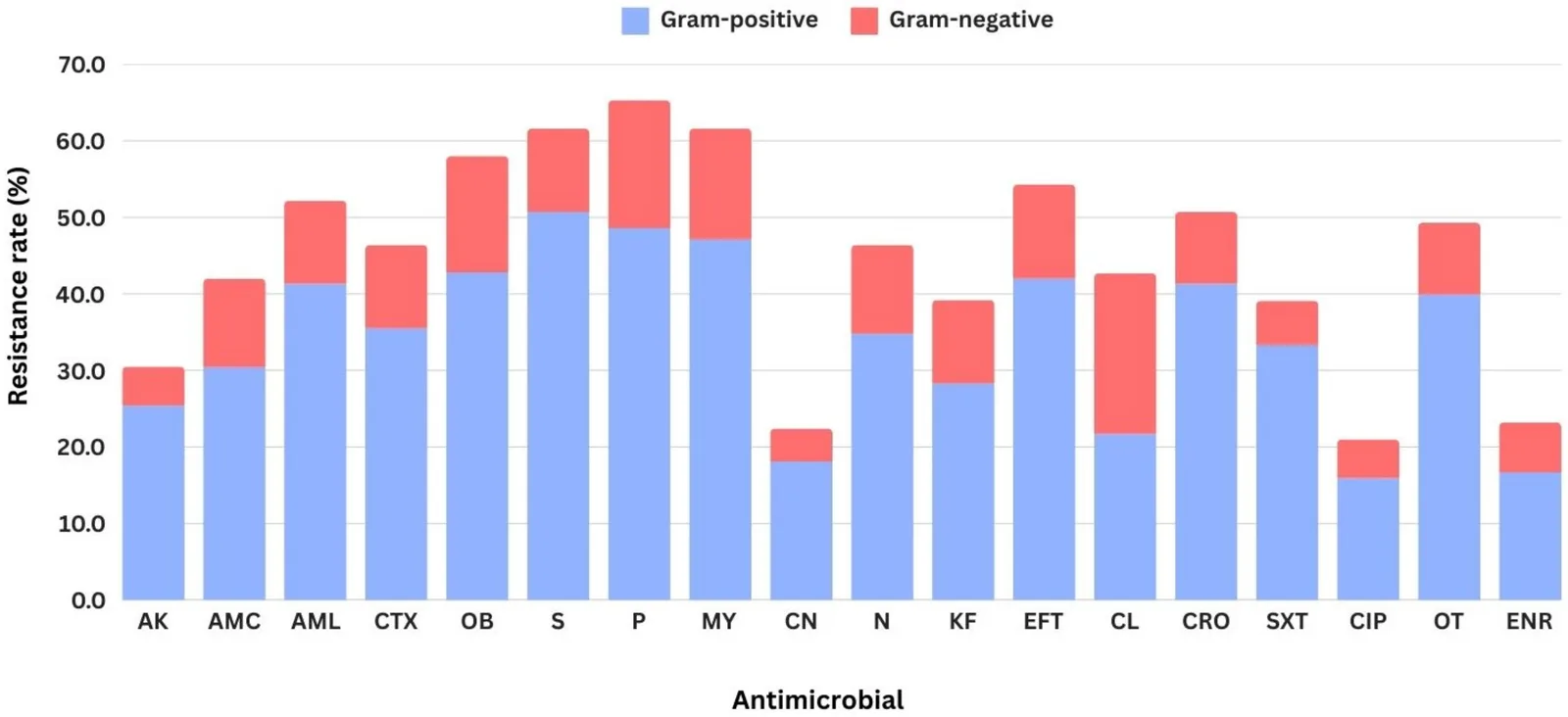
| 항생제 내성률 | penicillin 65.21%, streptomycin·lincomycin 61.59% | 18종 항생제 시험 |
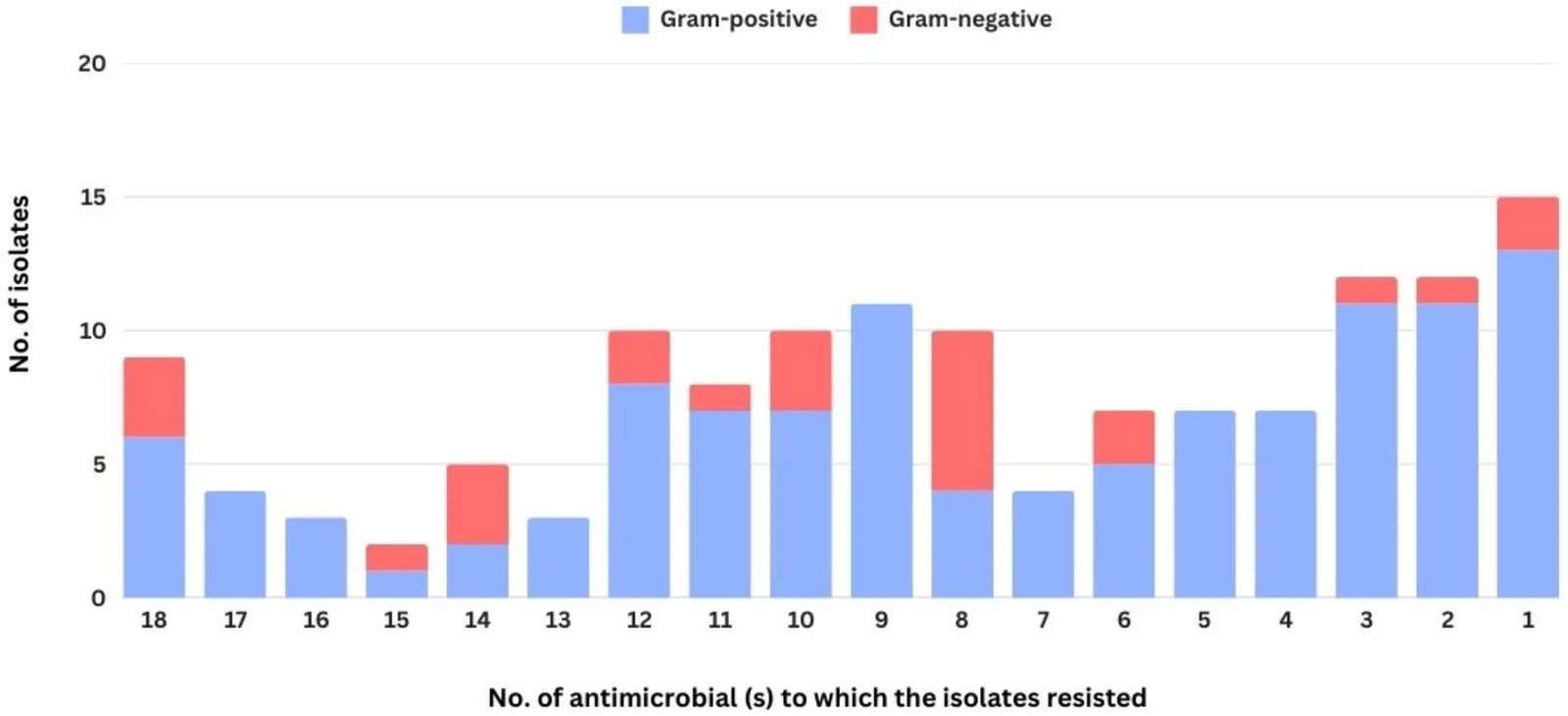
| 다제내성 | 9균주가 18종 모두에 내성 | 감수성 시험 |
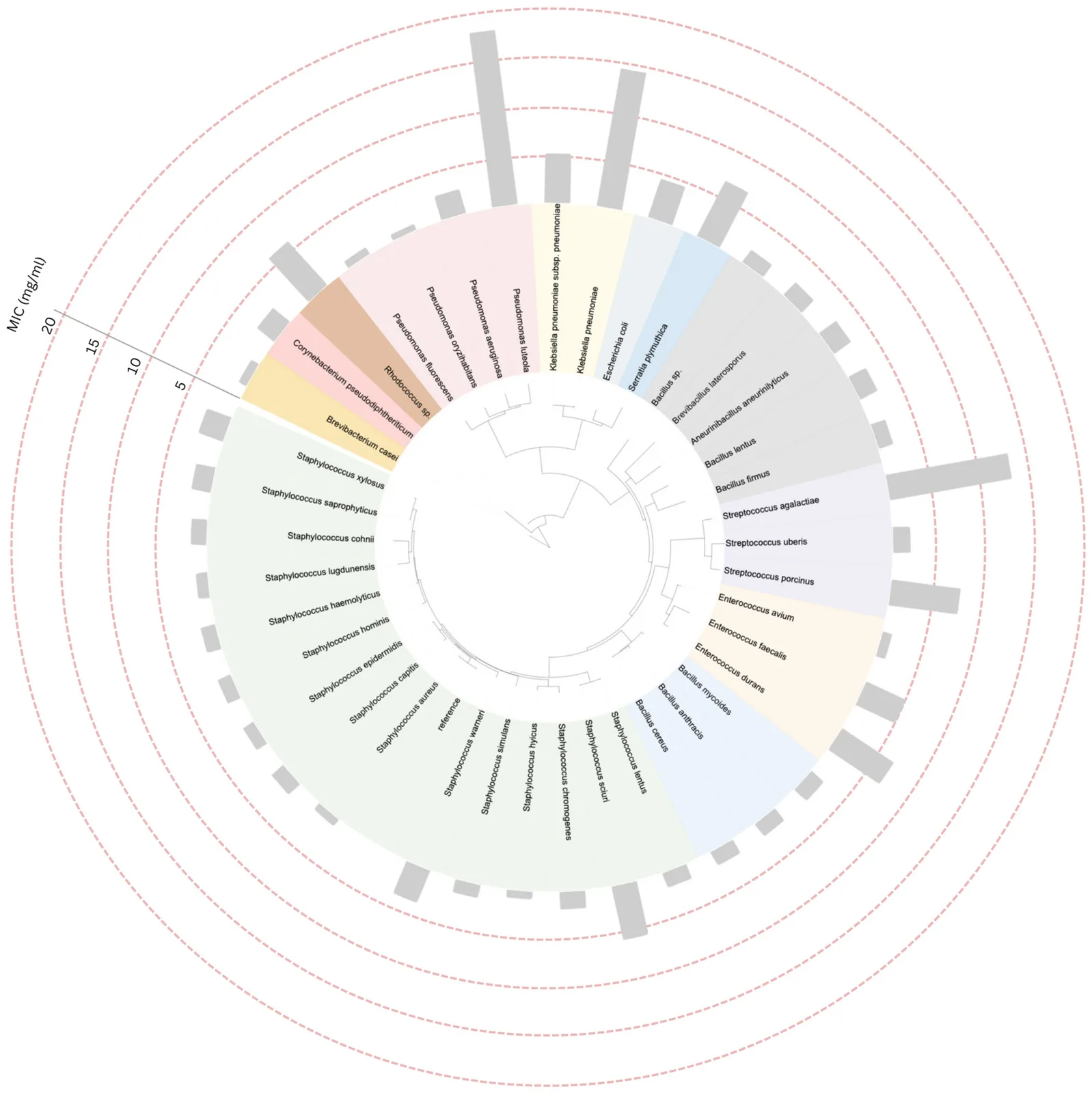
| C. sappan 평균 MIC | 0.63-17.68 mg/mL, Pseudomonas luteola에서 가장 높음 | 분리 병원균 |
| 총 세균수와 CMT 점수 | 유의하게 감소 | C. sappan 기반 유방 주입제, p < 0.01 |
7. 비판적 평가
강점
- 현장 우유 시료에서 병원균 분포와 내성을 함께 파악했다
- 시험관 활성과 동물 시험을 연결했다
한계 · 의문
- 동물 시험의 대조군 구성과 규모는 제공된 발췌에 나타나지 않는다
8. 향후 연구 방향
9. 결론
C. sappan은 여러 유방염 원인균에 항균 효능을 보이며 해당 지역 젖소 유방염 관리의 대체 치료 후보가 될 수 있다.
Keywords
bovine mastitis, Caesalpinia sappan, antimicrobial resistance, minimum inhibitory concentration, California Mastitis Test, intramammary infusion, dairy cattle
원문 그림
원문 그림 · 라이선스: cc-by