Animal Rehabilitation
Four-limb wireless IMU sensor system for automatic gait detection in canines
Four-limb wireless IMU sensor system for automatic gait detection in canines
- 저자: Zhang X; Jenkins GJ; Hakim CH; Duan D; Yao G
- 출처: - (2022)
- DOI/링크: https://doi.org/10.1038/s41598-022-08676-1
- 연구 계열: Topics/Animal Rehabilitation
- 투고일: 2021-08-30
TL;DR
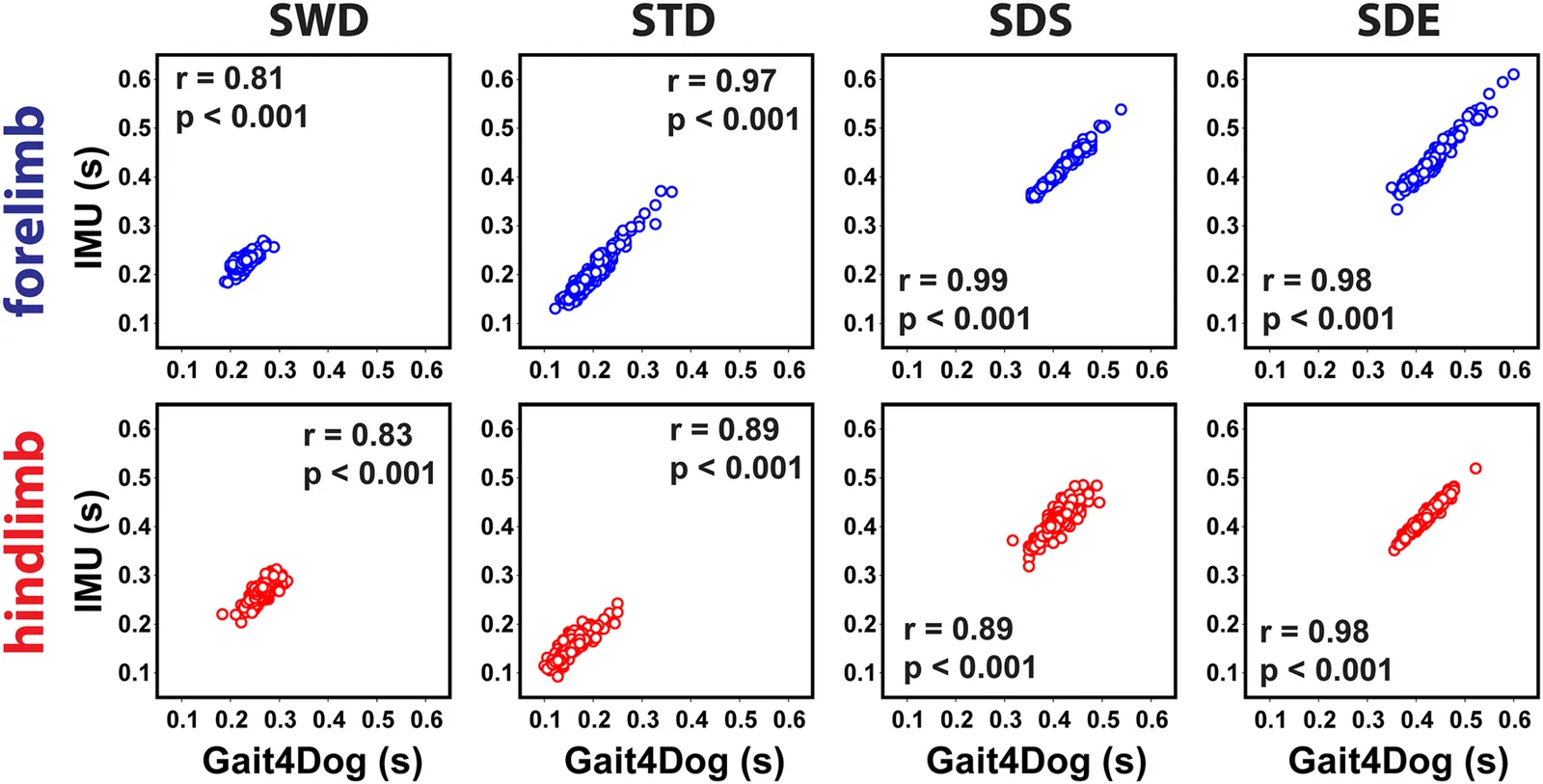
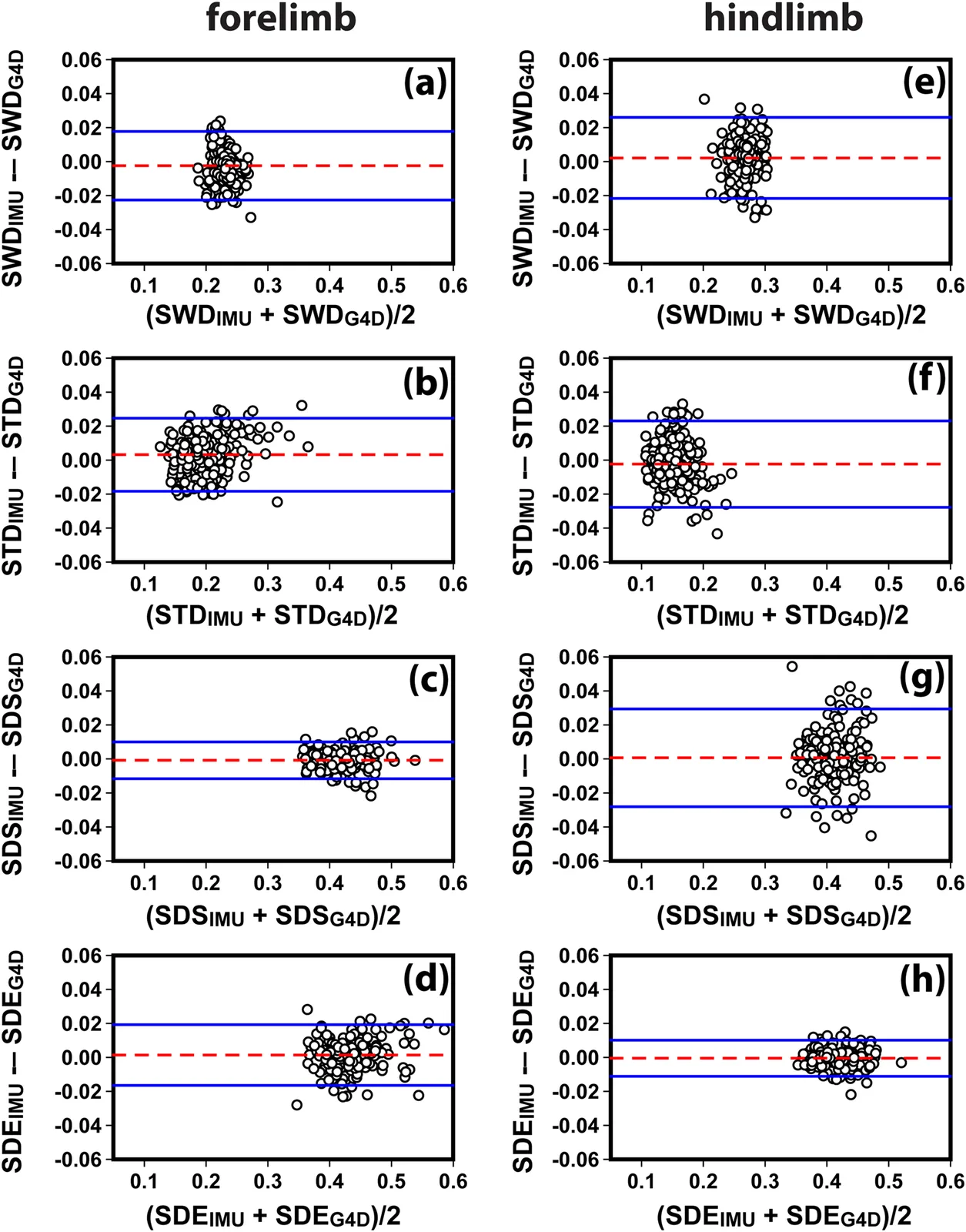
무선 관성측정장치(IMU) 4개를 네 다리에 달아 보폭(stride) 지표를 자동 측정하는 개 보행 분석 시스템을 개발했다. 압력 보행로(GAIT4Dog)와 동시 측정한 4마리에서 두 시스템의 지표가 높은 상관을 보였고, 앞다리 자료의 92% 이상에서 불일치가 평균값의 10% 미만이었다.
1. 연구 배경 및 동기
- 다루는 문제: 개 보행 연구와 신경근 질환 개 모델 연구에는 저비용의 보행 분석 도구가 필요하다.
- 기존의 공백 / 왜 필요한가: 네 다리의 유각기 시작과 끝을 자동으로 판정하는 저비용 시스템이 필요하다.
2. 관련 연구
- 기존 연구 흐름: 본문 발췌에는 선행연구 서술이 포함되어 있지 않다.
- 이 논문의 위치: 3D 프린팅 센서 홀더와 신호 분석 알고리즘으로 빠르고 일관된 장착과 자동 보행 사건 검출을 가능하게 하고 상업용 압력 보행로로 검증했다.
3. 핵심 기여
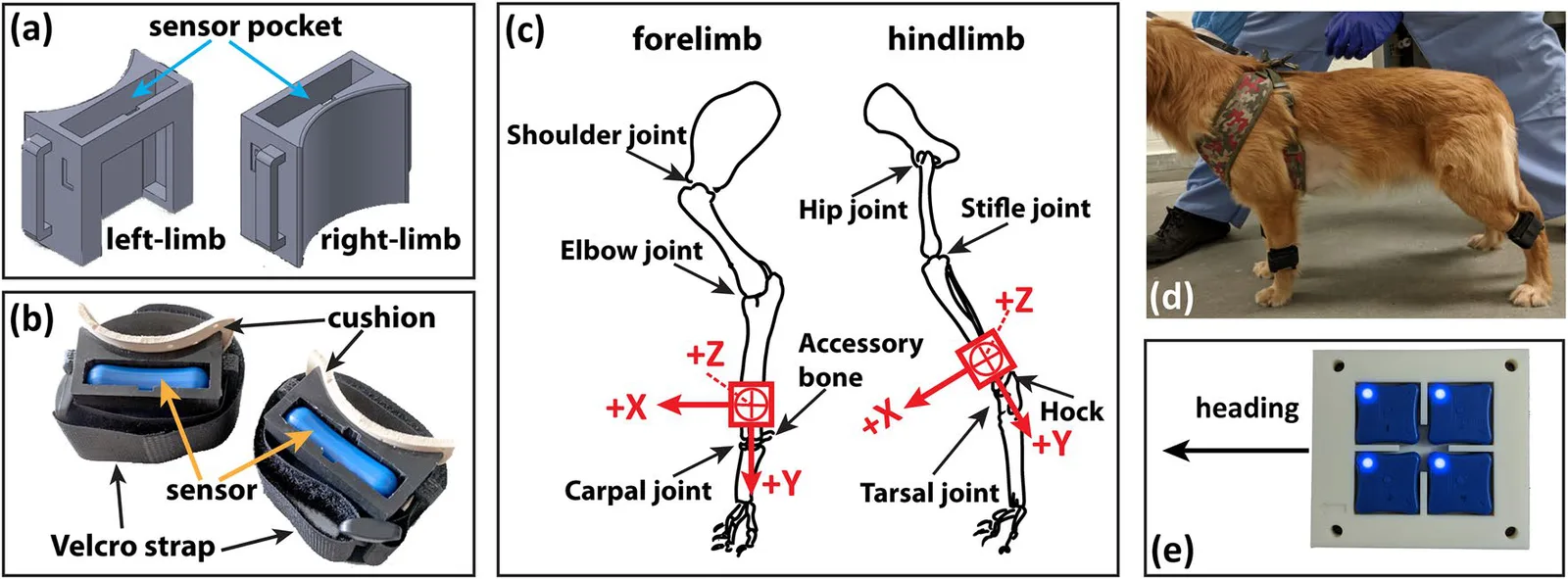
- 3D 프린팅 센서 홀더로 일관된 장착
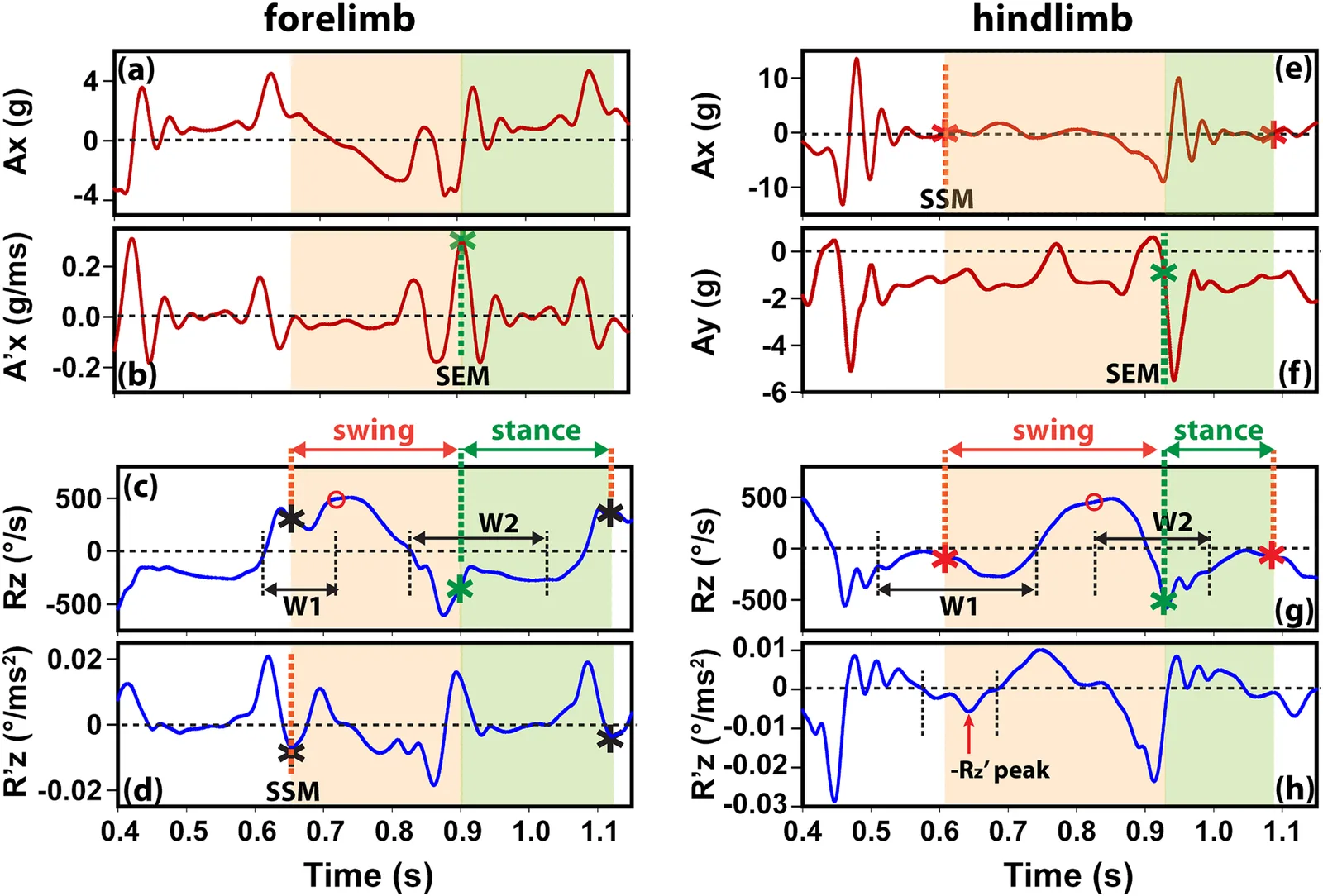
- 유각기 시작·끝 자동 검출 알고리즘
- 압력 보행로와의 동시 검증
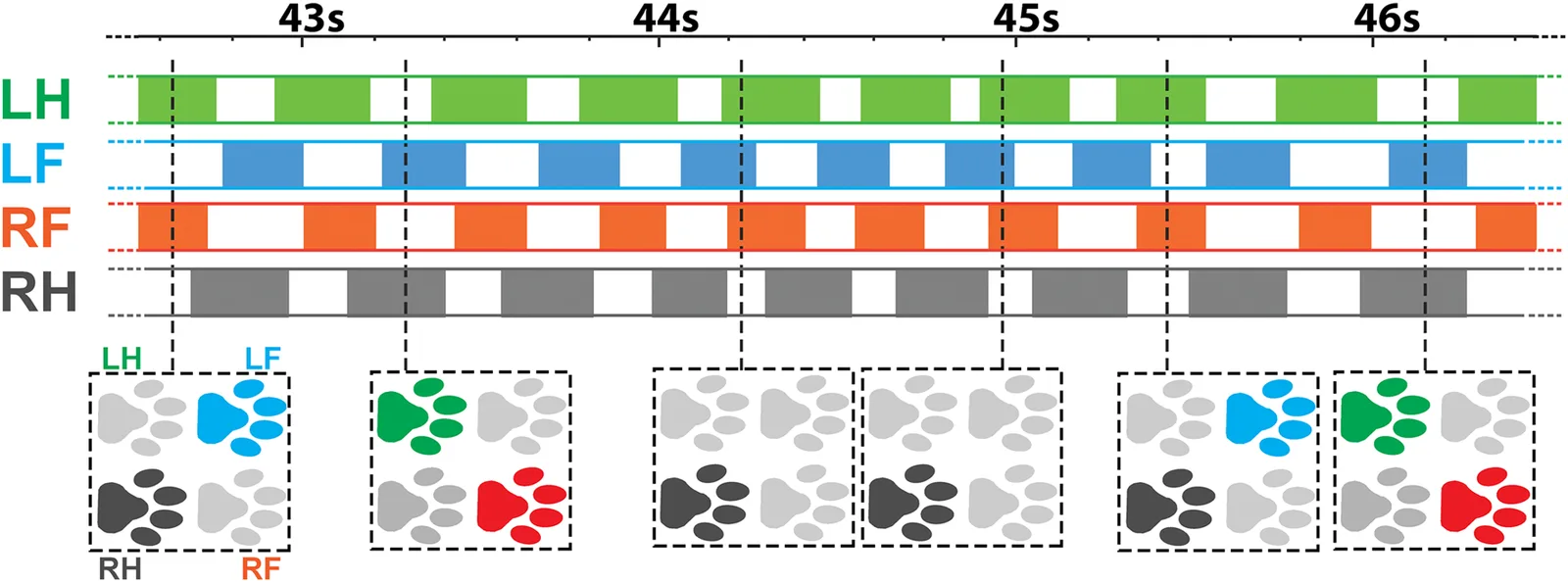
- 보행 유형 시각화와 급격한 보행 변화 식별
4. 제안 방법론
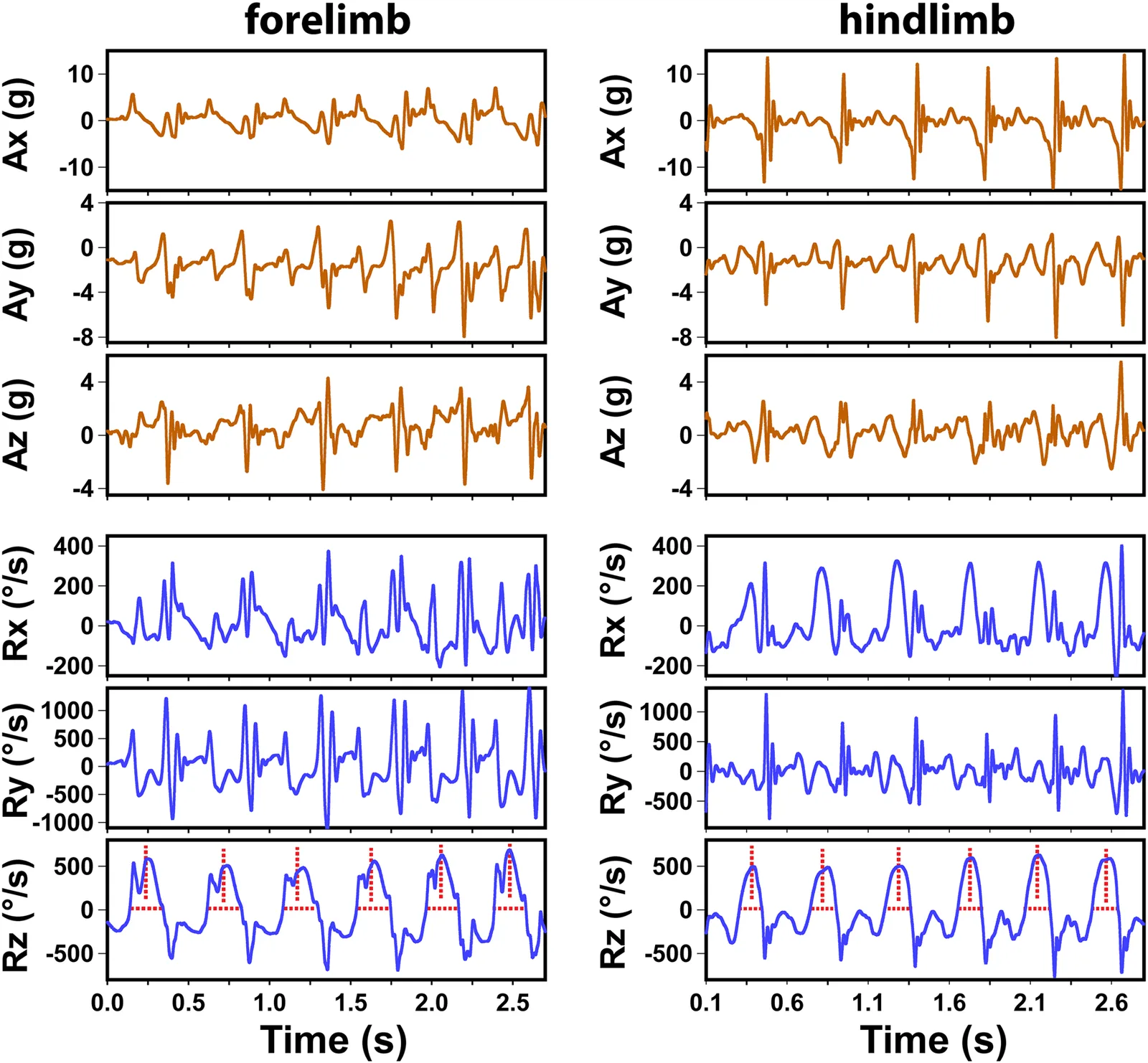
- 전체 접근 논리: 각 다리에 IMU를 장착해 가속도와 자이로 신호로 발이 땅에 닿고 떨어지는 시점을 알고리즘으로 정하고, 같은 보행을 압력 센서 보행로로 측정한 결과와 비교했다.
- 단계:
- 센서를 앞다리 수근관절 위, 뒷다리 족근관절 위에 장착
- 100 Hz로 가속도·자이로 신호를 무선 전송해 오프라인 분석
- GAIT4Dog과 동시 측정하고 GoPro 영상으로 시간 정렬
- 상관 및 Bland-Altman 분석
5. 실험 설정
| 항목 | 내용 |
|---|---|
| 대상/재료 | 2-4세 잡종견 4마리(골든 리트리버, 래브라도, 비글, 웰시 코기 교배) |
| 처리 조건 | IMU(LPMS-B2, 가속도 ±16 g, 자이로 ±2000도/초, 100 Hz)와 GAIT4Dog(180 Hz) 동시 측정, 개는 리드줄로 자기 속도로 걷게 함 |
| 대조군 | 압력 센서 기반 GAIT4Dog 보행로 |
| 측정 방법 | 유각기 시작·끝 시점과 보폭 지표 |
6. 실험 결과 분석
| 지표 | 변화(Δ) | 조건 · 유의성 |
|---|---|---|
| 두 시스템의 보폭 지표 상관 | 높은 상관 | 앞다리와 뒷다리 |
| 평균 측정 편향(Bland-Altman) | 미미함 | 앞다리와 뒷다리 |
| 두 시스템 불일치가 평균값의 10% 미만인 자료 비율 | 앞다리 자료 92% 이상 | 뒷다리도 동일했으나 평균값이 작은 한 지표 제외 |
7. 비판적 평가
강점
- 상업용 시스템과 동시 검증
- 경량 홀더로 일관된 장착과 개의 수용성
한계 · 의문
- 4마리의 소규모 검증
- 뒷다리의 한 지표는 평균값이 작아 불일치가 큼
8. 향후 연구 방향
9. 결론
4다리 IMU 시스템은 보행 유형을 시각화하고 급격한 보행 변화를 식별할 수 있었다. 수의학 응용이나 신경근 질환 개 모델 연구에서 효과적인 저비용 도구로 제시되었다.
Keywords
inertial measurement unit, canine gait analysis, wireless sensors, stride parameters, swing phase detection, Bland-Altman, pressure walkway
원문 그림
원문 그림 · 라이선스: cc-by